Congregation of Jesus and Mary · Since 1643
Prayer for the 19thCJM News
EN — Select a language
← Pray with Saint John Eudes

Prayer and meditation

Year of Saint Joseph

With the Apostolic Letter Patris Corde (With a Father’s Heart), Francis recalls the 150th anniversary of the proclamation of Saint Joseph as Patron of the Universal Church. To mark this occasion, a special Year of Saint Joseph was held from December 8, 2020, to December 8, 2021.

— Vatican News

We invite you to explore the recordings and texts we prepared for this occasion.

Recordings and texts

01 · Ave Joseph

Saint Joseph, spouse of the Virgin Mary

On March 19 we will celebrate the solemnity of Saint Joseph, with what could be a book’s subtitle: Saint Joseph, spouse of the Virgin Mary. Saint John Eudes highlights this twice in his familiar prayer “Ave Joseph”: “Hail Joseph, most worthy spouse of the Virgin Mother” and “Blessed be Mary, your spouse, who loved you as a husband and as a brother.”

By Jean-Michel Amouriaux, c.j.m.

Watch the video

02

Saint Joseph, an example of gentleness and patience

How can we fail to connect this with the words of his Son, Jesus, in the Gospel according to Saint Matthew: “Come to me, all you who are weary, for I am gentle and humble of heart, and you will find rest.” (Mt 11:28) These are the same qualities praised in Joseph—like father, like son! Joseph, an example of gentleness and a mirror of humility; Jesus, gentle and humble of heart.

By Jean-Michel Amouriaux, c.j.m.

Watch the video
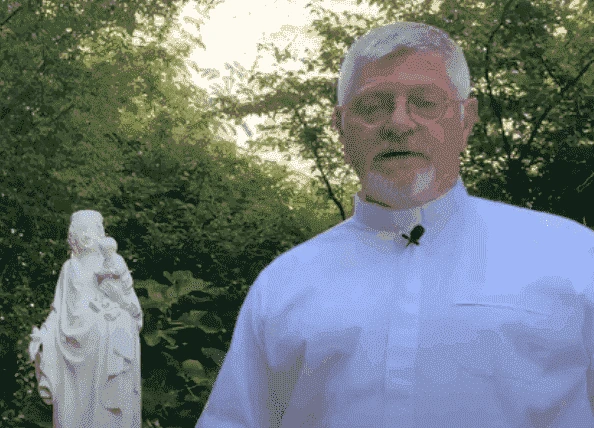
Jean-Michel Amouriaux beside a statue of Saint Joseph

03

Saint Joseph, mirror of obedience

One of Joseph’s great qualities was his obedience. Often seen today as a limitation on personal freedom, obedience shone in Joseph’s life, as it did in Mary’s and Jesus’ lives. It is a quality to rediscover, desire, and live.

By Jean Michel Amouriaux, c.j.m. ·

Ave Joseph

Let us use this time to make this aspect of Saint John Eudes’ spirituality better known. Here is a work prepared here: the Ave Joseph prayer in five languages. May Saint Joseph bless this work and our Congregation.

Version in 5 languages
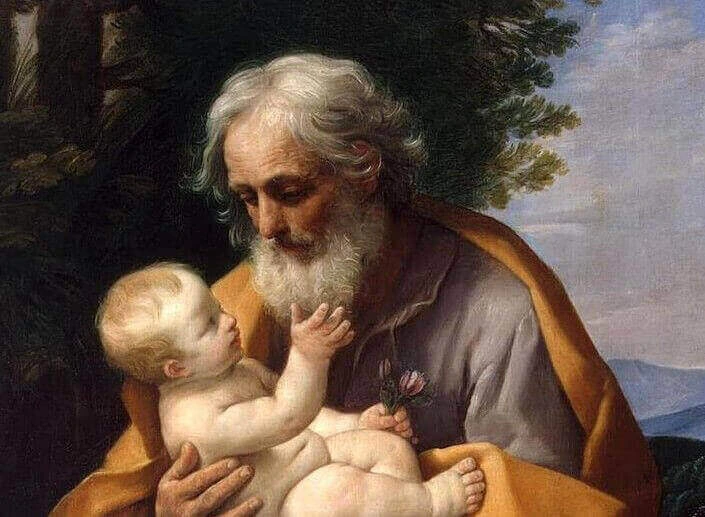
Saint Joseph holding the Infant Jesus, painting by Guido Reni

04

Saint Joseph in the school of Saint John Eudes

Saint John Eudes was among the authors who most fully developed a spiritual teaching about Saint Joseph. The year dedicated to Saint Joseph by Pope Francis offers an opportunity to make this teaching better known and benefit from its richness.

By Jean-Michel Amouriaux, c.j.m. ·

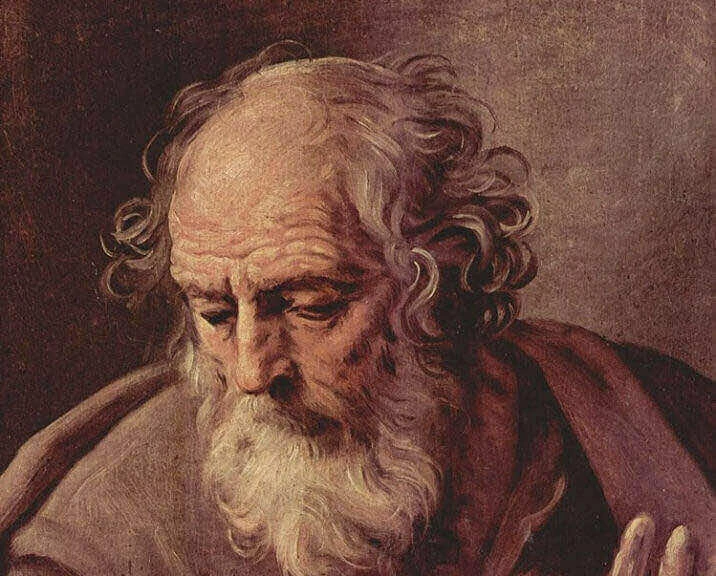
Saint Joseph, painting by Guido Reni

05

Saint John Eudes and devotion to Saint Joseph

Through his devotion and teaching, Saint John Eudes left us a spiritual treasure that invites us to grow in love for Saint Joseph, seek his intercession, and imitate his virtues and zeal. The Ave Joseph salutation, the litanies, and his many prayers remain a heritage to rediscover and explore.

By François Thibodeau, c.j.m. ·

Saint Joseph, spouse of the Virgin Mary

On March 19 we will celebrate the solemnity of Saint Joseph, with what could be a book’s subtitle: Saint Joseph, spouse of the Virgin Mary. Saint John Eudes highlights this twice in his familiar prayer “Ave Joseph”: “Hail Joseph, most worthy spouse of the Virgin Mother” and “Blessed be Mary, your spouse, who loved you as a husband and as a brother.”

As we know, the Jewish marriage ritual took place in two stages. This can be seen in the texts:

In Luke 1:26–27, the young woman of Nazareth is described as “betrothed to a man named Joseph, of the house of David, and the virgin’s name was Mary.” Mary and Joseph are already committed to one another; this commitment cannot be dissolved without an act of divorce, but the betrothed couple do not yet live under the same roof.

The second stage of marriage is the public celebration of the wedding, which marks the beginning of their life together. Imagine the couple beneath the wedding canopy, blessed seven times by the officiant, as some icons depict them.

The divine interventions recounted in the Gospels—in Saint Luke for Mary and in Saint Matthew for Joseph—take place between these two stages: “Before they lived together, she was found to be with child through the Holy Spirit.” (Mt 1:18) It is to move on to the second stage that the angel encourages Joseph and reveals God’s plan to him: “Joseph, son of David, do not be afraid to take Mary your wife into your home, for the child conceived in her is from the Holy Spirit. She will bear a son, and you are to name him Jesus, for he will save his people from their sins.” (Mt 1:20–21)

Mary and Joseph thus begin with a real plan for a life together, but between the two stages God introduces this couple’s particular mission: they will welcome the Messiah, the Son of God. Since the first stage already involves a commitment, a secure place is ready for his coming. But the second stage will unfold quite differently: through their love, their marriage, and their family, Mary and Joseph fulfil a divine mission. They welcome the incarnate Word.

The rich expression “take into your home,” used by the angel, means much more than providing material shelter: it means receiving with the heart, wholeheartedly, into one’s heart. Joseph is entrusted with taking Mary, his wife, into his home, receiving the child to be born into his fatherhood, and giving him his name—a revelation of his identity: Jesus, God saves.

Saint John Eudes loved to celebrate the feast of the marriage of Mary and Joseph. He wrote its celebration, its offices, and litanies. For him, this was the precise moment when the Son of God found his dwelling place: in the love of Mary and Joseph, in their home, in their hearts.

On March 19, the Church contemplates this relationship between Mary and Joseph, this love that welcomes the Son of God. It is a chaste love in the fullest sense of the word: chastity means a relationship of great quality, without control, domination, or possession—a love that gives life to the other. All disciples of Jesus are called to live this quality of love, each according to their state of life. Chastity has often been confused with a series of prohibitions. What a misunderstanding! It is the opposite: an intense, true love that always regards the other as a person and never as an object. Pope Francis likes to speak of the revolution of tenderness, an expression that invites us to love intensely, in the image of the love within the Holy Family, as an essential means of proclaiming the Gospel.

The love of Mary and Joseph has the particular character of being a virginal love. This, too, is not a restriction. Mary and Joseph knew the greatest love and the deepest possible communion in their relationship with their son, Jesus, the Son of God. This relationship fulfilled their whole being and all the desires of their hearts and affections. Nothing is higher for Mary than divine motherhood; nothing is greater for Joseph than fulfilling his mission as father of the Messiah. As Saint John Paul II wrote in his apostolic exhortation Redemptoris Custos, 19: “Should we not think that the love of God, poured into the human heart through the Holy Spirit (cf. Rom 5:5), shapes every human love in the most perfect way? (…) The depth of this intimacy, the spiritual intensity of the union and contact between persons—between man and woman—ultimately come from the Spirit, who gives life (cf. Jn 6:63). Joseph, obedient to the Spirit, found in him the very source of love, of his spousal love as a man, and this love was greater than anything the just man could have expected according to the measure of his human heart.”

This March 19, ...

Jean Michel Amouriaux, c.j.m.

March 19, 2021

Saint Joseph, mirror of obedience

One of Joseph’s great qualities was his obedience. This is not an easy word to use today, because obedience is immediately perceived as a limitation on personal freedom. Yet obedience shone in Joseph’s life, as it did in Mary’s and Jesus’ lives. It is a word to rediscover—and, more than a word, a quality to desire and live.

Joseph’s obedience is visible in the infancy narratives in Saint Matthew and Saint Luke. Saint Luke stresses one aspect of Joseph’s and Mary’s obedience: they are a couple who observe religious customs, respect God’s Law, and carefully follow the prescriptions developed in Judaism, such as Jesus’ circumcision, Mary’s purification, the presentation in the Temple, and the pilgrimage to Jerusalem. They have recognized what is right and good as coming from God, and they conform to it. Their obedience is defined by their faithfulness.

Let us dwell a little longer on what Saint Matthew tells us. In the first two chapters of his Gospel, Joseph has four dreams. Four times he receives the words of God’s messenger and responds without delay, acting accordingly. Thus, when Joseph sees that his wife is pregnant and decides to end this first stage of marriage, he hears the angel’s voice telling him not to be afraid, but instead to continue with his marriage, because the child conceived in her comes from God’s Spirit. God’s messenger does not say “you must,” but “do not be afraid.” This is significant: the angel begins with the feeling in Joseph’s heart to lead him towards a different attitude—trust. As Pope Francis says, “Through obedience, Joseph overcomes his personal drama and saves Mary.” Joseph listened, accepted another way of understanding what was happening in his life, and gave his assent. This is the path of obedience in a human heart.

We also see Joseph’s obedience when the Holy Family leaves for Egypt and returns. In his dreams, Joseph perceives the angel’s voice and follows it. He seems accustomed to hearing and following this voice. Some might say how fortunate he was to receive such visits from an angel! But what is actually happening? In the secrecy of his heart—what we would call his conscience—Joseph perceives an inner prompting and recognizes that it comes from God. The fact that the text speaks of a dream rather than a vision emphasizes the inward character of what happens to Joseph. As John Eudes says, “Hail Joseph, faithful to interior silence.” Joseph is not preoccupied with a thousand things; he remains in that peace of soul which enables him to receive events and the inner promptings of God’s Spirit. His obedience has become an inward disposition, without agitation even amid dramatic events. His obedience gives him a kind of security, even to the point of taking the child and his mother in the middle of the night to flee an approaching danger or to return home.

This is where Joseph’s fourth dream comes in, with this detail from the Gospel: “He was afraid to go to Judea. Warned in a dream, he withdrew to Galilee.” Here fear preceded the dream, showing that without this inner listening, even when the intuition is right, there is fear rather than peace. Joseph hears a word that reaches him in his fear; he follows what he has perceived and then withdraws to Nazareth in peace.

Obedience is an inner listening. We know the image of the sleeping Joseph, a statue Pope Francis appreciates. It expresses the importance of listening within. Surely, if we spent more time listening to what happens in our hearts, we could better perceive how to guide our lives. This presupposes the other attitude John Eudes highlights in the same salutation: humility. It is a prerequisite: recognizing ourselves as humble before the reality we must live and awaiting a light we do not possess. Prayer is this listening; it is the true moment of obedience, in the image of Saint Joseph. ...

Jean Michel Amouriaux, c.j.m.

June 18, 2021

What does Saint John Eudes say about Saint Joseph?

Saint John Eudes was among the authors who most fully developed a spiritual teaching about Saint Joseph. The year dedicated to Saint Joseph by Pope Francis offers an opportunity to make him better known and benefit from the richness of this teaching. Saint John Eudes opens new horizons for us, particularly in two areas:

1) To understand more fully the meaning of the Incarnation: when we say that Jesus is the Word of God made flesh, he came to share our human condition.
2) To perceive more deeply his relationship with the Virgin Mary and the relationship we ourselves can have with her. In both cases, Joseph is a privileged witness who can illuminate our own lives.

In the seventeenth century, John Eudes’ century (1601–1680), Saint Joseph was, in a sense, rediscovered. All the preachers and spiritual teachers proposed the same path of faith: to know the life of Jesus of Nazareth more fully in order to discover the face of God. The gateway to God is the historical life of Jesus. Everything that helps us know this life more fully opens us to the knowledge of God. His childhood thus reveals God’s face, and this concerns Joseph, whom the Gospels mention precisely in connection with Christ’s birth and childhood.

In 1621, by a decision of Pope Gregory XV, the feast of Saint Joseph became obligatory. From then on, countless places were dedicated to Saint Joseph or to the Holy Family, including the Eudist Congregation itself on January 22, 1644, a few months after its foundation.

Saint John Eudes’ first biographers report that he “was deeply devoted” to Saint Joseph, both because of all he perceived in Joseph the Just—his qualities and attitudes—and because he had experienced the real and powerful intercession of the guardian of the Holy Family. The Jesuit Jean-Joseph Surin, a major figure of the same period, wrote in a letter that “Saint Joseph had become the patron of all the great souls of this century.” John Eudes found in Saint Joseph a particular model for his relationship with the Virgin Mary; we shall return to this.

Let us pause on one point: why address the saints? As the saying goes, it is better to address God than his saints. That is not what John Eudes tells us! For him, it is evident that the Church is a body made up of countless members, the disciples. All are linked to Jesus and to one another, and the same Spirit gives life to the whole. Among these members are we who live on earth, and all those who have gone before us, especially the saints. We can enter into a relationship with them, as John Eudes writes in his first major book, The Life and Kingdom of Jesus in Christian Souls: we must adore Jesus in them—he is everything in them—and thank them for all the honour and love they have given to Jesus. We ask them to let us share in that same love, in everything that animated their lives. Without this vision, devotion remains superficial.

Because of the importance of Jesus’ life, John Eudes insists that Jesus’ disciples have a living relationship with—I quote—“the holy men and women who conversed with Our Lord on earth” (Complete Works, I, 345). In other words, those who saw and heard Jesus, as Saint John says, those who touched the Word of Life. First among them are Mary and Joseph.

Let us listen to and pray the salutation composed by John Eudes; it speaks for itself:

Hail Joseph, image of God the Father
Hail Joseph, father of God the Son
Hail Joseph, sanctuary of the Holy Spirit
Hail Joseph, beloved of the Most Holy Trinity
Hail Joseph, most worthy spouse of the Virgin Mother
Hail Joseph, father of all the faithful
Hail Joseph, faithful observer of sacred silence
Hail Joseph, lover of holy poverty
Hail Joseph, model of gentleness and patience
Hail Joseph, mirror of humility and obedience
Blessed are you among all men
And blessed are your eyes, which saw what you saw
And blessed are your ears, which heard what you heard
And blessed are your hands, which touched the Word made flesh
And blessed are your arms, which carried him who carries all things
And blessed is your heart, burning with the most ardent love for him
And blessed be the Eternal Father, who chose you
And blessed be the Son, who loved you
And blessed be the Holy Spirit, who sanctified you
And blessed be Mary, your spouse, who cherished you as a husband and as a brother
And blessed for ever be all those who love and bless you.

Jean-Michel Amouriaux, c.j.m.

January 19, 2021

Saint John Eudes and devotion to Saint Joseph

From December 8, 2020, to December 8, 2021, it is the Year of Saint Joseph, according to Pope Francis’ wish. His apostolic letter, entitled Patris Corde, aims to increase love for this great saint, encourage us to implore his intercession, and inspire us to imitate his virtues and zeal. “The greatness of Saint Joseph,” he writes, “lies in the fact that he was the spouse of Mary and the adoptive father of Jesus.” This is why the Pope readily presents him to us as a beloved father, a tender father, an obedient father, an accepting father, a creatively courageous father, a working father, and a father in the shadows.

Fortunately, through his devotion and teaching, Saint John Eudes left us a spiritual “treasure” that likewise invites us “to grow in love for this saint, implore his intercession, and imitate his virtues and zeal.” The Salutation to Saint Joseph, the litanies, and the many prayers he taught us remain a heritage to rediscover and explore more deeply.

It is very interesting to find several articles on the Internet referring to the Salutation to Saint Joseph composed by Saint John Eudes. Thanks to Father Jean-Rémi Côté’s meticulous work, however, we have access to the Virtual Eudist Library, where we can find the remarkable study by our confrere Charles Plomet, published in Montreal in 1982 in the Cahiers de Joséphologie. We are heirs and custodians of treasures too often consigned to oblivion. Our Founder’s admiring gaze upon the splendid realities revealed by the person and unique role of Saint Joseph can accompany us not only during this year but throughout our lives.
Saint John Eudes lets the joy of his heart, his praise, and his love burst forth as he contemplates this “mystery” of Joseph within that of Jesus and Mary. Drawing on a few paragraphs from Father Plomet’s study, we can “bless” the Lord for giving us such a confrere, who so fully welcomed this wonderful spirituality. The following lines are chiefly drawn from that study.

The “Ave Joseph” salutation

Through its twelve salutations and twelve blessings, this prayer has a biblical flavour. Saint Joseph is honoured because of his privileged relationships with the three divine Persons: he reflects the eternal Father in time; he is the legal father of the Son, whom he loves, nourishes, and protects; the Holy Spirit makes him and his home a sacred place containing a treasure.

A just man, Joseph never ceases to cooperate within the mystery of salvation: he is a helper in faith, head of the Holy Family, spouse of the Virgin Mary, and protector of the entire assembly of believers, especially men and women consecrated to God. Saint John Eudes praises Joseph’s silence and poverty. Even amid God’s unexpected and wondrous actions, Joseph is “silent”: he does not speak. John Eudes highlights qualities he contemplates in the heart of Jesus and Mary: gentleness, patience, humility, and obedience. Saint Joseph reflects them; his personal conduct offers them to us as an example. In 1956, Father Émile Legault, c.s.c., even entitled his unforgettable popular production in honour of Saint Joseph “The Great Attentive One.”

Because of their relationship with Jesus’ childhood, following the mystics of his time, especially Saint Bernardine of Siena and Saint Francis de Sales, Saint John Eudes blesses God with wonder-filled tenderness for Saint Joseph’s whole being.

“Image of God the Father, adoptive father of God the Son, temple of the Holy Spirit,” Joseph is loved by the Holy Trinity. Faithful helper in God’s plan, most worthy spouse of the Virgin Mary, Joseph is the father of all the faithful, guardian of virgins consecrated to God, faithful to interior silence, friend of holy poverty, example of gentleness and patience, and the man blessed among all men.

Saint John Eudes does not hesitate to bless God for everything Joseph’s eyes saw, everything his ears heard, his hands that touched the Incarnate Word, his arms that carried him who carries the world, his breast upon which the Son of God rested, and his heart burning with love for him. In the image of the heavenly Trinity of the Father, Son, and Holy Spirit, Saint John Eudes recalls the “earthly Trinity” formed by the community of Mary, Jesus, and Joseph: he blesses the eternal Father who chose him, the Son who loved him, and the Holy Spirit who sanctified him. He greets Mary, his spouse, who loved him as a husband and as a brother, the angel who protected him, and all those who bless and love him.

The litanies

Saint John Eudes wrote several prayers in Latin in the form of litanies. Like the stained-glass windows of churches and cathedrals, these litanies offer a reading of sacred history, a reflection of biblical revelation. This was a skilful way to evangelize the People of God, who did not know biblical translations in their own languages or the benefits of the Internet and social media. In this way, he reached thousands upon thousands of people who were poor or unable to read and had no access to publications. Saint John Eudes takes up titles from the Ave Joseph salutation, adds others, and examines them in greater detail. He draws them chiefly from the accounts of Christ’s childhood and invents poetic metaphors to express the saint’s virtues and entrust different groups of people to his protection: the poor, the afflicted, workers, pilgrims, priests, and the faithful.

The Holy Hearts

It would have been surprising if Saint John Eudes—declared by the Church “the father, doctor, and apostle of the liturgical devotion to the holy hearts of Jesus and Mary”—had not associated Saint Joseph with this devotion. Just as he had adored Jesus reigning in Mary’s Heart, in 1652 Saint John Eudes modified the Matins antiphon proposed to the Diocese of Paris for the feast of Saint Joseph with these words: “Come, let us adore Jesus reigning in the Heart of Joseph.” For Saint John Eudes, Joseph cannot be separated from Jesus and Mary. He pays devout and respectful attention to Saint Joseph as, above all, the favourite saint of Mary’s Heart. She cherished the most delicate feelings for him; together they lived through trying hours, but also unique joys. Jesus’ presence transformed their hearts more and more, and with him who is the source of all Love, they formed but one Heart.

Saint John Eudes prays to Saint Joseph in these words: “O great Saint, we offer you our hearts; unite them with yours and with the heart of Jesus and Mary, asking them to make this union inviolable and eternal.”

Saint John Eudes did not compose a treatise on devotion to Saint Joseph. Meditating on, living, and preaching the mystery of Jesus Christ forming his mystical body, he discovers Jesus and the saints in Jesus. The privileged place of the Blessed Virgin among them leads him to distinguish her spouse Joseph beside her. For the role of this Just Man towards Mary and the infant Jesus, within the plan of the Holy Trinity, is essential: a faithful and prudent servant whom God made master of his house, foster father of his Son, most faithful helper, and great counsellor on this earth. “O blessed Joseph and all the Saints of Jesus, especially the beloved of the Heart of Jesus and Mary, love Jesus and Mary for me, and pray to them to make me according to their Heart, to place me among the children of their Heart, and to associate me with the love you bear them eternally.”

+ François Thibodeau, c.j.m.
December 13, 2020